
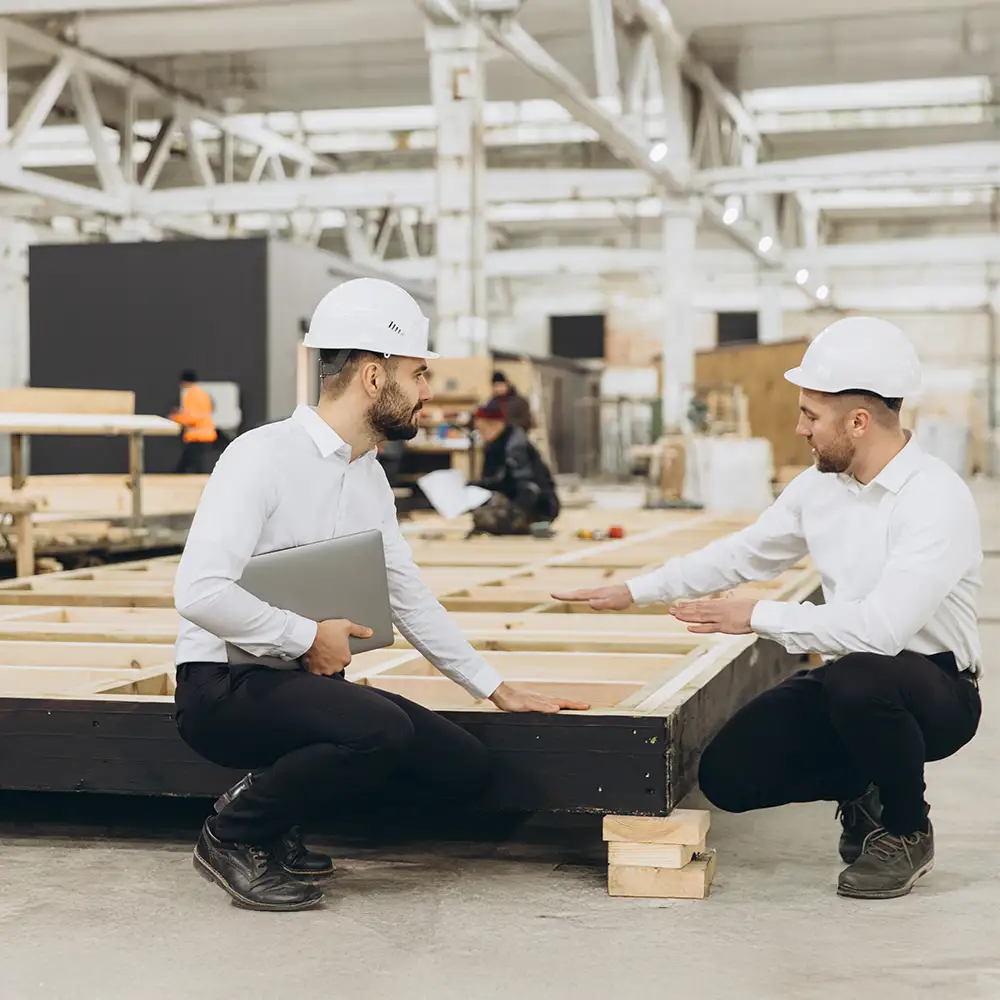
Wood is experiencing a renaissance as one of the most important building materials for sustainable construction. With its versatility, easy availability and ecological benefits, wood is an ideal choice for construction projects that need to be both economical and climate-friendly. Timber construction is developing rapidly, supported by modern technologies and innovative construction methods. TATEKU Innovation plays a crucial role in developing and promoting these trends, ensuring that timber construction can meet the challenges of the future.
Modular timber construction: efficiency and sustainability
Modular construction is a major trend in timber construction. Building elements such as walls, ceilings or floors are prefabricated in the factory under standardised factory conditions and all necessary fixtures such as windows, doors, facades or pipes are already installed. These modules are either transported to the construction site and assembled or even combined into a room cell in the factory and later installed as a complete prefabricated room. This method saves time and money and enables precise construction.
TATEKU Innovation is driving the development of modular systems that are not only efficient but also sustainable. The use of digital planning and automated production optimises timber consumption while minimising CO₂ emissions. Modular timber construction offers enormous advantages, especially for large-scale projects such as residential complexes or public buildings.
Technology in timber construction: sensors and digitalisation
Modern technologies are revolutionising timber construction. One outstanding example is the use of moisture sensors, which help to recognise potential damage at an early stage. These sensors monitor the moisture in load-bearing timber elements and send warning signals when critical values are reached. This technology is used in particular in wet rooms, (flat) roofs or along water-bearing pipes in order to reduce the risk of moisture damage.
TATEKU Innovation is working on further developing these technologies and integrating them into new construction projects. Combined with digital twins, such systems enable precise monitoring and maintenance of buildings. This increases the service life of timber buildings and ensures long-term safety.
Sustainable building construction with wood
Wood is also increasingly being used in building construction, where it serves as an alternative to steel and concrete. Thanks to modern joining techniques and materials, it is now possible to realise multi-storey buildings made of wood that are just as stable and durable as conventional structures. Examples of this include the Ascent MKE in Milwaukee/USA, the Mjøstårnet in Brumunddal/NO and the HOHO in Vienna/AT, all of which are over 84 metres high.
TATEKU Innovation supports this development by researching new material combinations and production processes. The aim is to drastically reduce the carbon footprint of building construction projects while improving economic efficiency. Timber buildings store carbon and actively contribute to the reduction of greenhouse gases - a decisive advantage compared to [DO1] conventional building materials.
Combination of tradition and innovation
While wood has a long tradition as a building material, modern architecture shows how versatile and forward-looking this raw material can be. Architects and civil engineers are increasingly focussing on hybrid construction methods in which wood is combined with other materials such as glass, concrete or steel. These approaches combine the aesthetics of wood with the functionality of modern building constructions.
TATEKU Innovation supports architects and construction companies in realising such hybrid concepts by working with them to develop new technologies and materials. The result is sustainable, energy-efficient and visually impressive buildings that fulfil both ecological and aesthetic requirements.
Energy-efficient timber buildings: A contribution to climate neutrality
Another important aspect of timber construction is its energy efficiency. Timber constructions offer excellent insulating properties, which reduces the heating and cooling requirements of buildings. In addition, they can be combined with renewable energy technologies such as solar systems or heat pumps to further reduce energy consumption. At the same time, wood is an impressive material in terms of durability and fire resistance.
TATEKU Innovation works on projects that combine timber construction with state-of-the-art energy solutions. The aim is to create buildings that are not only climate-neutral, but can even achieve climate-positive effects. These developments make timber construction a central element of the energy transition.
Economic and ecological advantages of timber construction
The advantages of timber construction lie not only in its sustainability, but also in its economic potential. The increasing demand for environmentally friendly construction methods is creating new markets and opportunities for companies operating in this field.
TATEKU Innovation helps construction companies to take advantage of these opportunities by giving them access to the latest technology and expertise. By optimising construction processes and materials, TATEKU Innovation helps to ensure that timber construction remains not only ecologically but also economically attractive.
The future of construction lies in wood
Timber construction impressively demonstrates how tradition and innovation can be combined to create sustainable solutions for the challenges of modern architecture. With TATEKU Innovation at their side, construction companies and architects can fully utilise the possibilities of timber construction and at the same time make an important contribution to climate protection.
The future of construction lies in wood - and TATEKU Innovation ensures that this future is sustainable, economical and innovative.


 English
  German